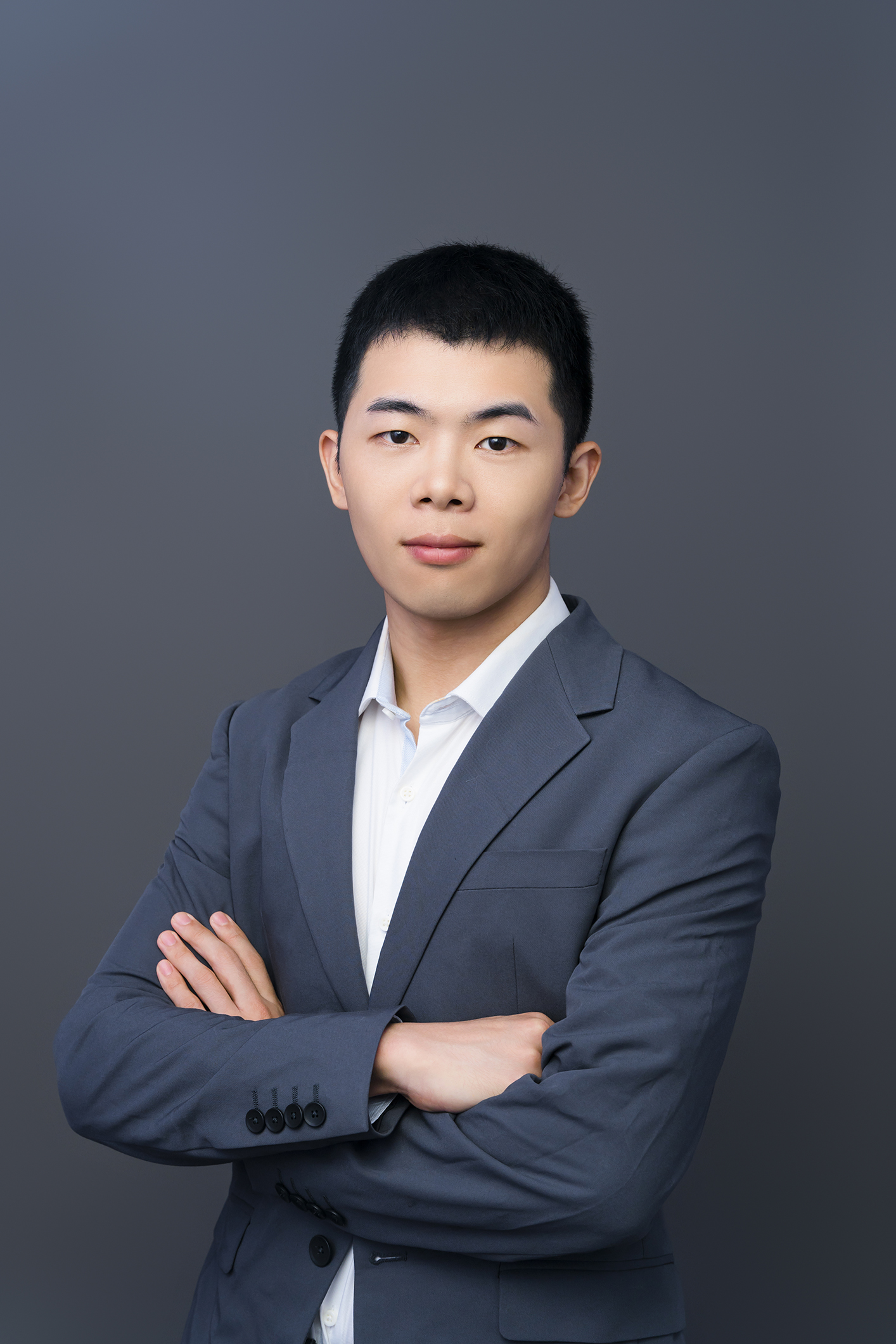
Short Bio
Dr. Yujie Wu is currently an Assistant Professor (Ph.D. Supervisor) in the Department of Computing at The Hong Kong Polytechnic University. He received his Ph.D. from Tsinghua University in 2021 under the supervision of Prof. Luping Shi and Prof. Jun Zhu, and conducted postdoctoral research in the group of Prof. Wolfgang Maass in Austria (2021.10–2024.2).
His research lies at the intersection of computational neuroscience and brain-inspired AI, with the ultimate goal of understanding and leveraging the brain’s computational principles to develop efficient, intelligent, and sustainable AI systems.
His work has been published in leading journals and conferences, including Nature, Science Robotics, Nature Computational Science, Nature Communications, ICML, ICLR, AAAI, with more than 8,000 Google Scholar citations. His work also received several distinctions, such as cover papers (e.g., Nature, Sci. Robot.), ESI Top 1% Highly Cited Papers, Best Paper Awards (e.g., TNNLs, J. Control Decis.) and Annual Recommended Papers (e.g., Nat. Comput. Sci.). Dr. Wu currently serves as an Associate Editor for Neurocomputing, Senior PC for several prestigious AI conferences, and Reviewer for Cell- and Nature-serials journals. He has been recognized as a Rising Star in Brain–Computer Intelligence in China (2025), the World’s Top 2% Most-Cited Scientists by Stanford University (2025-2026), Young BAAI Scholar (2026), the PolyU Presidential Young Scholar (2024), Young Innovative Researcher Award (2026).
Opening
If you are interested in joining the lab, please email me your CV, transcripts (if available), and a brief statement addressing some of the followings:
1. Why do you want to pursue a PhD?
2. Why are you interested in our lab, and which research direction excites you most?
3. Which of my papers have you read, and what limitations or possible extensions do you see?
All applications will be carefully reviewed. Due to the large number of inquiries, only shortlisted candidates will typically be contacted within two weeks.
Please note: this lab is best suited for applicants with a strong long-term interest in brain-inspired intelligence, neuromorphic computing, or computational neuroscience, rather than those seeking a general AI degree only.
News
- [07/2026] 🏆 Received the 2027 IEEE Transactions on Neural Networks and Learning Systems Outstanding Paper Award. Congratulations to my excellent collaborators!
- [05/2026] 💰 Received the Young Innovative Researcher Award (HKD 500,000 research grant) from the University Grants Committee.
- [03/2026] 💰 Awarded a large Gifted Research Fund from Hong Kong foundations to support our research on brain-inspired AI architectures.
- [02/2026] 💰 Awarded a Gifted Research Fund from mainland Chinese companies to support our research on brain-inspired sensing technologies.
- [02/2026] 📝 One paper published in Neural Networks. Congratulations to my excellent collaborators!
- [02/2026] 📝 Two papers accepted to ICLR 2026. Congratulations to my excellent collaborators!
- [02/2026] 🏆 Selected as a BAAI Young Scholar (CNY 500,000 research grant) by the Beijing Academy of Artificial Intelligence (BAAI).
- [01/2026] 💼 Selected as an Editorial Board Member for Discover Artificial Intelligence (Springer Nature).
- [10/2025] 🌟 Selected as a Rising Star in Brain–Computer Intelligence in China by the World Association of Young Scientists (1 of 6 recipients nationwide).
- [09/2025] 🌟 Featured in the World’s Top 2% Most-Cited Scientists list by Stanford University (2024, 2025).
- [09/2025] 📝 One paper published in Nature Communications. Congratulations to my excellent collaborators!
- [08/2025] 🏅 Recognized as a Top Reviewer for NeurIPS 2025.
- [07/2025] 💰 Awarded a General Research Fund (GRF) by the Research Grants Council of Hong Kong.
Selected Ten Publications (updated as of Jan 2025)
- Y. Wu, W. Maass. "A simple model for Behavioral Time Scale Synaptic Plasticity (BTSP) provides content addressable memory with binary synapses and one-shot learning." Nature Communications, 2025. (Featured paper)
- Y. Wu, L. Deng, et al. "Adaptive spatiotemporal neural networks through complementary hybridization." Nature Communications, 2024, 15(1): 7355. (Featured paper)
- F. Yu# Y. Wu# (#Equal Contribution), M. Song#, et al. "Brain-inspired multimodal hybrid neural network for robot place recognition", Science Robotics, May 2023. (Cover paper)
- Y. Wu, R. Zhao, J. Zhu, et al. "Brain-inspired global-local learning incorporated with neuromorphic computing." Nature Communications, 2022, 13(1): 1–14.
- R. Zhao#, Y. Zhe#, H. Zheng#, Y. Wu#, et al. "A framework for the general design and computation of hybrid neural networks." Nature Communications, 2022.
- Y. Wu, L. Deng, G. Li, et al. "Direct training for spiking neural networks: faster, larger, better." In Proceedings of the AAAI Conference on Artificial Intelligence (AAAI), 2019, 33: 1311–1318. (Spotlight)
- Y. Wu, L. Deng, G. Li, et al. "Spatio-temporal backpropagation for training high-performance spiking neural networks." Frontiers in Neuroscience, 2018, 12: 331. (ESI Top 1% Highly Cited Paper)
- Z. Zhang#, T. Li#, Y. Wu#, et al. "Truly concomitant and independently expressed short- and long-term plasticity in a Bi₂O₂Se-based three-terminal memristor." Advanced Materials, 2019, 31(3): 1805769. (Impact Factor: 30.2)
- J. Pei, ..., Y. Wu, et al. "Towards artificial general intelligence with hybrid Tianjic chip architecture." Nature, 2019, 572(7767): 106–111. (Cover paper)
- L. He, Y. Xu, W. He, Y. Lin, Y. Tian, Y. Wu, et al. "Network model with internal complexity bridges artificial intelligence and neuroscience." Nature Computational Science, 2024, 4: 8. (Cover runner-up)
Service Activities
- Editorial Board Member for Discover Artificial Intelligence
- Associate Editor for Neurocomputing
- Guest Editor for Neuromorphic Computing and Engineering
- Guest Editor for IEEE Transactions on Cognitive and Developmental Systems
- Associate Editor for PRSC 2024, CIS-RAM 2024
- Review Editor for Frontiers in Neuroscience
- Chair member for IC-MIND 2025
- Program Committee Member for AAAI 2024, 2025
- Technical Program Committee Member for IEEE GlobCon series
- Reviewer for Nature series journals and multiple top AI conferences
Selected Talks
- December 2024, Hangzhou, China. Plasticity Models for Hippocampal One-shot Online Learning, China Brain-Machine Intelligence Conference
- November 2024, Yunnan, China. Brain-Inspired Hybrid Intelligence, International Youth Forum on Brain and Intelligence
- October 2024, Xiamen, China. Brain-Inspired Hybrid Intelligence, Nanqiang Forum, Xiamen University
- July 2024, Salzburg, Austria. One-Shot Learning and Robust Recall with BTSP, Graz University of Technology
- January 2024, Hong Kong, China. Brain-Inspired Hybrid Global-Local Learning Methods, The Hong Kong Polytechnic University
- May 2023, Beijing, China. Exploring Brain-Inspired Local and Local-Global Learning with Neuromorphic Computing, Institute of Automation, Chinese Academy of Sciences